
Starting a new job often comes with a long to‑do list - but figuring out what to do with your CSS pension doesn't have to be one of them.
In fact, if you end your employment with a participating CSS employer, you don’t have to do anything with your accumulated funds in the Plan. You can simply leave your pension funds invested in the Plan right up until the end of the year when you turn age 71*.
And here’s the bonus: if your next employer is a participating CSS co‑op or credit union, you can often take your pension with you and keep contributing to your CSS account - no restart required.
Let’s take a closer look at this advantage of your CSS membership.

Taking your pension with you
One of the most valuable features of your CSS Pension Plan membership is its portability. If you change jobs and move from one participating CSS employer to another, you can often continue building your pension without missing a beat.
The CSS Pension Plan is a multi-employer, multi-sector plan with approximately 300 co-operative and credit union employers across Canada. So if your new employer is also a co‑op or credit union, there’s a good chance they participate in CSS too.
If you start a new job with another participating CSS employer within 12 months, you can skip the waiting period and seamlessly resume contributing to your same CSS Pension Plan account automatically.
This is considered a transfer between employers - not a termination. In other words, because you’re still working for a Plan employer, from our perspective, you’re still a CSS member.
Your service is considered continuous as long as there’s no break in employment longer than 12 months. If the break does exceed 12 months, you may need to rejoin the Plan through the standard enrolment process.
Determining continuous service
| Break less than 12 months | Break more than 12 months | |
| You were contributing to the Plan at previous employer | Service is deemed continuous. You must join the Plan and contributions must start immediately. | Service does not apply. Normal policies for determining Plan membership apply. |
| You were not contributing to the Plan at previous employer | Service is deemed continuous. Your length of service with the previous CSS employer is taken into account to determine eligibility to join the Plan. | Service does not apply. Normal policies for determining Plan membership apply. |
Leaving your funds in the Plan
If you change jobs and your new employer is not a participating CSS employer, we'll send you a current statement of your account along with a description of your termination options.
One of those options is refreshingly simple: you can leave your accumulated pension funds invested in the CSS Pension Plan.
There’s nothing you need to do to take advantage of this option - no forms to complete or need to transfer funds out of the Plan. You’ll remain a CSS member and have continued access to many of the benefits you enjoyed while working for a CSS employer, including:
-
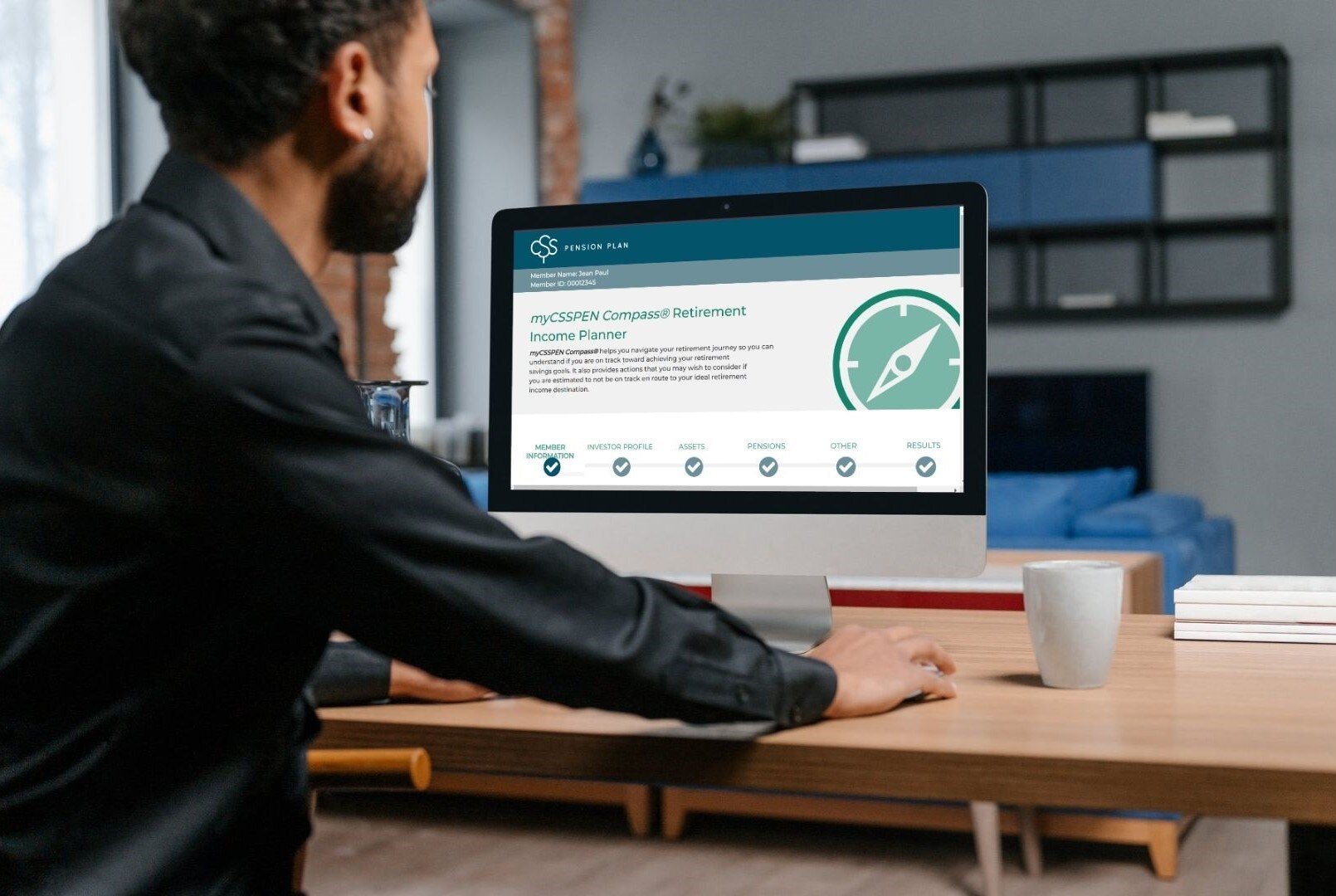
Online access to your pension account through myCSSPEN
-
Complimentary access to planning tools and the Plan’s Advisory Team
-
Continued access to professionally managed investment funds and low fees
-
Complimentary webinars, information, and educational resources
-
Access to CSS’ in‑plan retirement income options (available at age 50+)
While you won’t be able to make new contributions as an inactive member, you can continue to grow your pension by transferring other registered assets - such as RRSPs - into your CSS account.
Learn more about the types of funds you can transfer into CSS.
And remember: time can be one of the most powerful drivers of growth. Even without ongoing contributions, your pension can continue to benefit from long-term investing.
Of course, you may decide that transferring your pension out of the Plan once you’re no longer working for a CSS employer is the right choice for you - and that option is available too. Our team of Advisors can help point you in the right direction.
Learn more about your choices in our “Leaving your employment” life event.
 *In accordance with pension legislation, you must convert your pension funds into a retirement income by the end of the year when you turn age 71.
















.png)